
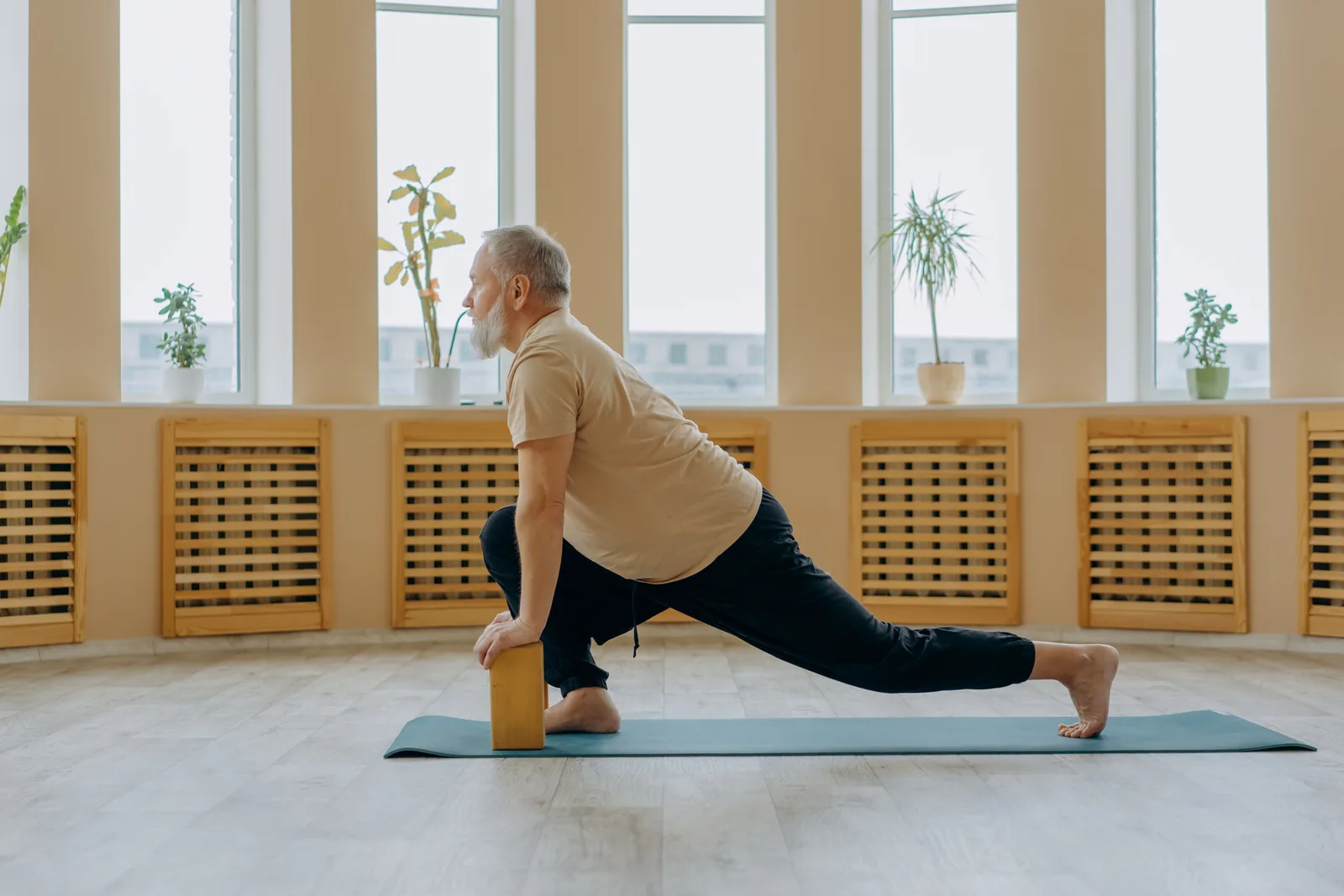
A weekly yoga plan can be easier to follow when it includes short sessions, walking and recovery days. The example below is beginner-friendly and uses supported standing, seated mobility, breathing and a longer flexibility session at the weekend.
Use the Week as a Framework
The schedule is not a test and does not need to be completed exactly as written. Its purpose is to distribute different kinds of gentle movement across seven days. A session may last only five minutes, and a planned activity can be replaced with rest when that is more appropriate.
Choose a clear floor area, a stable chair and clothing that allows easy movement. A mat is optional. Avoid positions that require you to move quickly to the floor if getting up and down is uncomfortable.
Practical tip
Place the chair and any mat in view before the planned session. A visible cue reduces the number of decisions needed to begin.
The Seven-Day Plan
Monday: Gentle hip mobility
Use supported hip circles, seated knee lifts and a comfortable standing side step. Keep the session to five or ten minutes.
Tuesday: Rest or relaxed walking
Choose rest or an easy walk at a pace that allows normal conversation. The day is intentionally light.
Wednesday: Seated and standing stretches
Combine seated side bends, shoulder rolls, supported calf stretches and a gentle chest-opening position.
Thursday: Breathing and posture practice
Sit tall without stiffness. Practise calm breathing, relaxed shoulder movement and a few slow turns through a comfortable range.
Friday: Gentle lower-body yoga
Use a supported standing pose, a small knee bend, a comfortable side reach and a seated hamstring stretch.
Saturday: Full 15-minute flexibility routine
Bring together the most comfortable movements from the week. Move from standing support to seated positions and finish with quiet breathing.
Sunday: Rest and recovery
Review which sessions felt useful and which need adjustment. Prepare one realistic plan for the following week.
Weekly Schedule
| Day | Focus | Suggested duration | Alternative |
|---|---|---|---|
| Monday | Hip mobility | 5–10 minutes | Two supported movements |
| Tuesday | Rest or walking | Flexible | Complete rest |
| Wednesday | Seated and standing stretches | 8–12 minutes | Chair-only session |
| Thursday | Breathing and posture | 5 minutes | Three calm breaths and shoulder rolls |
| Friday | Lower-body yoga | 8–12 minutes | Supported standing sequence |
| Saturday | Full flexibility routine | Up to 15 minutes | Repeat favourite movements |
| Sunday | Rest and review | Flexible | Quiet walk if desired |
Make Each Session Easier to Follow
- Use the same general time of day when practical.
- Begin with one or two familiar movements.
- Keep a chair close for support.
- Move slowly between positions.
- Include rest days without considering them missed sessions.
- Record only a simple note such as “comfortable,” “shortened” or “rest.”
Summary Checklist
Weekly Yoga FAQ
Do I need to practise every day?
No. The schedule includes light days and recovery. It can also be reduced to two or three short sessions each week.
Is a yoga mat required?
No. Many movements can be completed standing or seated with a stable chair. Use a non-slip surface and footwear that feels secure.
What if getting down to the floor is difficult?
Choose chair-based and supported standing movements. Floor positions are optional and should not be used when transitions are uncomfortable or unsafe.
Related Articles
Informational Disclaimer
The content on this website is provided for general informational and educational purposes only. It is not a substitute for professional medical advice, diagnosis or care. Individual needs and abilities vary. Consult a qualified healthcare professional before starting a new exercise routine or making significant changes to your diet or lifestyle, especially if you have an existing health condition. Stop any activity that causes pain, dizziness or unusual discomfort.